Showing posts from Convolutional Neural Network tag

SETI Talk: Planetary Defense: Long Period Comets
Together with my team, we gave a talk on how we can provide more warning time in case a long-period comet happens to be in a collision trajectory with Earth. .

Searching for Long Period Comets with Deep Learning at NASA and SETI
In planetary defence (yes! there is such a thing, where scientists and engineers try to defend the planet from hazards), long-period comets are recognized as the potentially most devastating threat. However, any new comet on an impact trajectory would likely only be discovered about one year before impact. The goal of this project is to add years of extra warning time by providing comet searchers directions on where to look for comets when they are still far out. To aid and guide a dedicated …
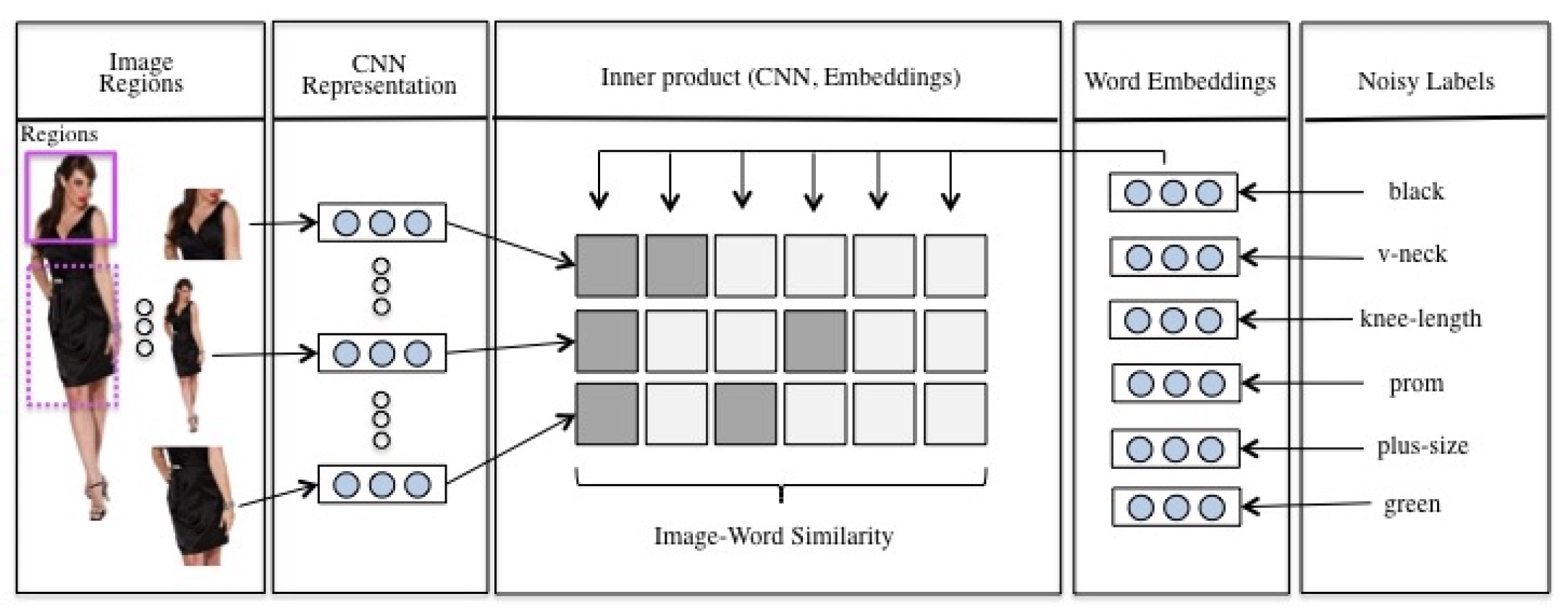
Cross-modal Search for Fashion Attributes
In this paper we develop a neural network which learns inter- modal representations for fashion attributes to be utilized in a cross-modal search tool. Our neural network learns from organic e-commerce data, which is characterized by clean image material, but noisy and incomplete product descrip- tions. First, we experiment with techniques to segment e- commerce images and their product descriptions into respec- tively image and text fragments denoting fashion attributes. Here, we propose a …
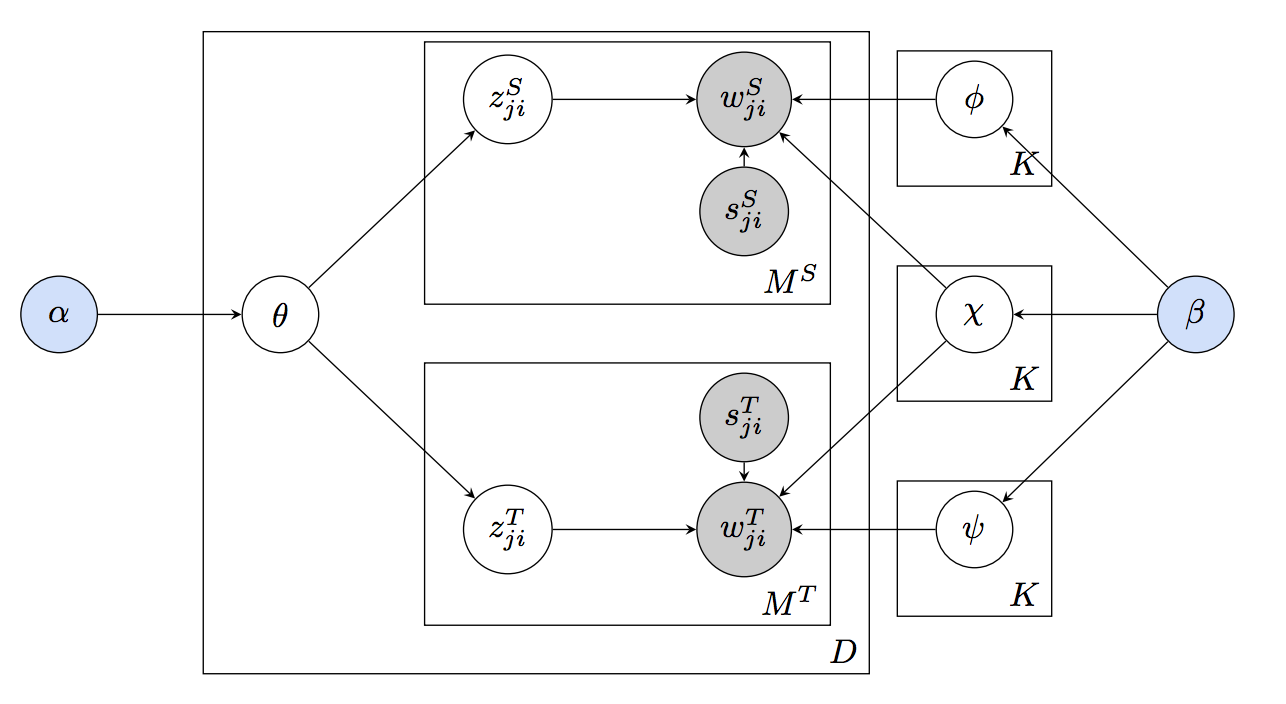
Latent Dirichlet Allocation for Linking User-Generated Content and e-Commerce Data
Automatic linking of online content improves navigation possibilities for end users. We focus on linking content generated by users to other relevant sites. In particular, we study the problem of linking information between different usages of the same language, e.g., colloquial and formal idioms or the language of consumers versus the language of sellers. The challenge is that the same items are described using very distinct vocabularies. As a case study, we investigate a new task of linking …
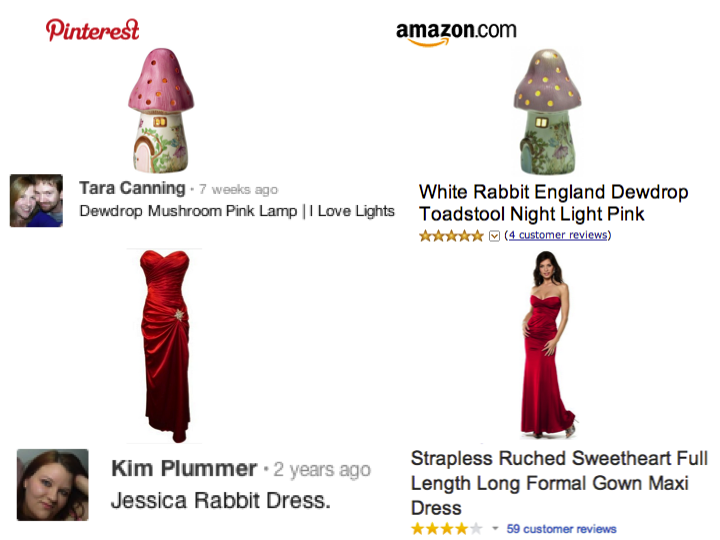
Learning to Bridge Colloquial and Formal Language Applied to Linking and Search of E-Commerce Data
We study the problem of linking information between different idiomatic usages of the same language, for example, colloquial and formal language. We propose a novel probabilistic topic model called multi-idiomatic LDA (MiLDA). Its modeling principles follow the intuition that certain words are shared between two idioms of the same language, while other words are non-shared. We demonstrate the ability of our model to learn relations between cross-idiomatic topics in a dataset containing product …

Inferring User Interests on Social Media From Text and Images
We propose to infer user interests on social media where multi-modal data (text, image etc.) exist. We leverage user-generated data from Pinterest.com as a natural expression of users’ interests. Our main contribution is exploiting a multi-modal space composed of images and text. This is a natural approach since humans express their interests with a combination of modalities. We performed experiments using the state-of-the-art image and textual representations, such as convolutional neural …
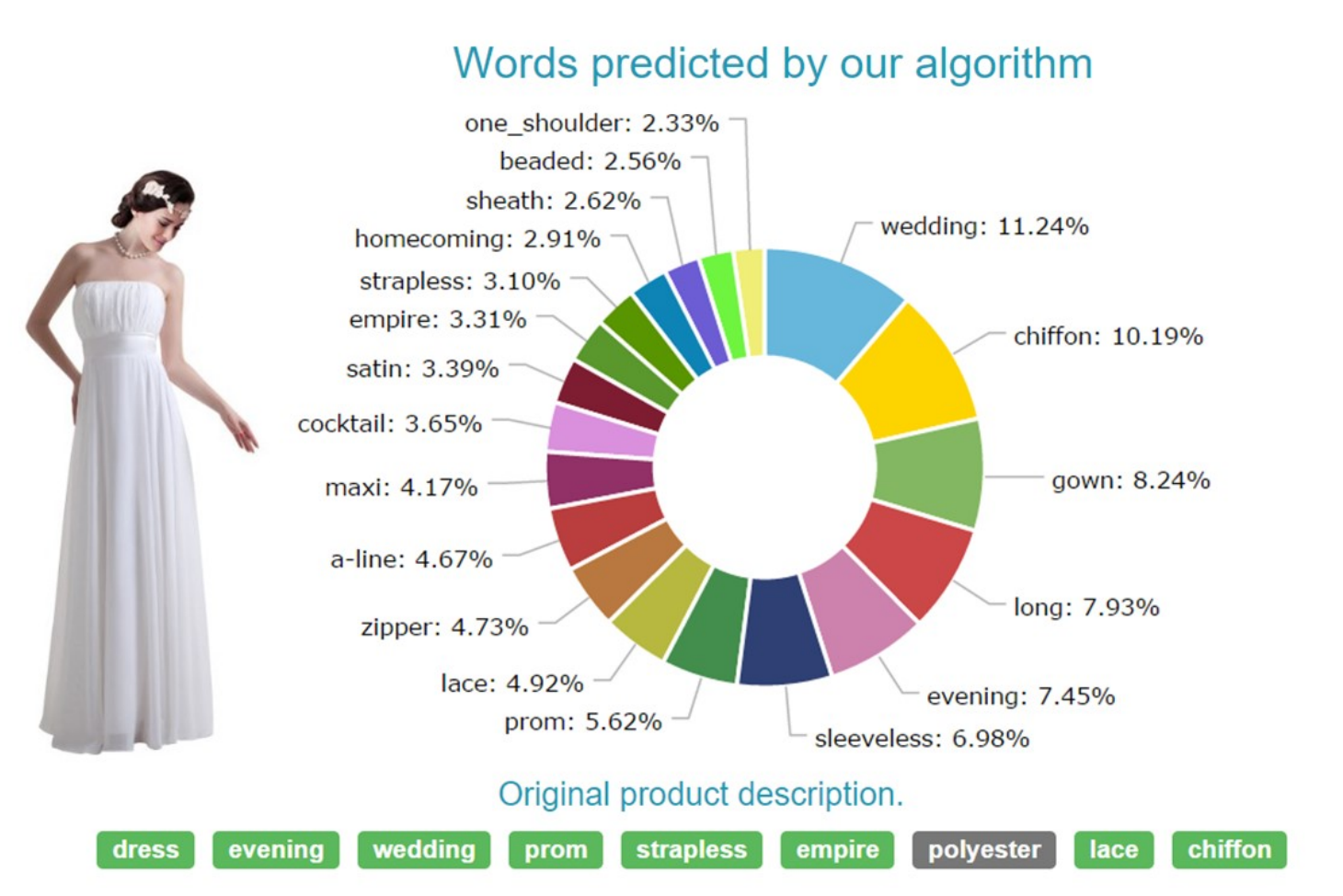
Cross-Modal Fashion Search
In this paper we show an online demo that allows bidrectional multimodal queries for garments. Check out our paper Cross-Modal Fashion Search In Lecture Notes in Computer Science (LNCS) Vol. 9517, pp 367-373, 2016 Susana Zoghbi, Geert Heyman, Juan Carlos Gomez, Sien Moens PDF